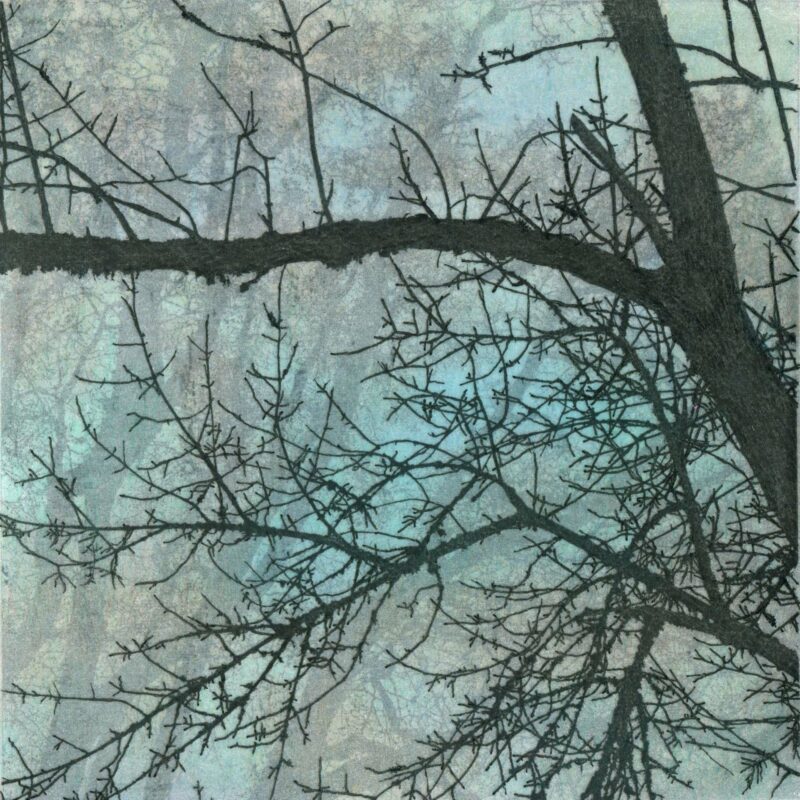
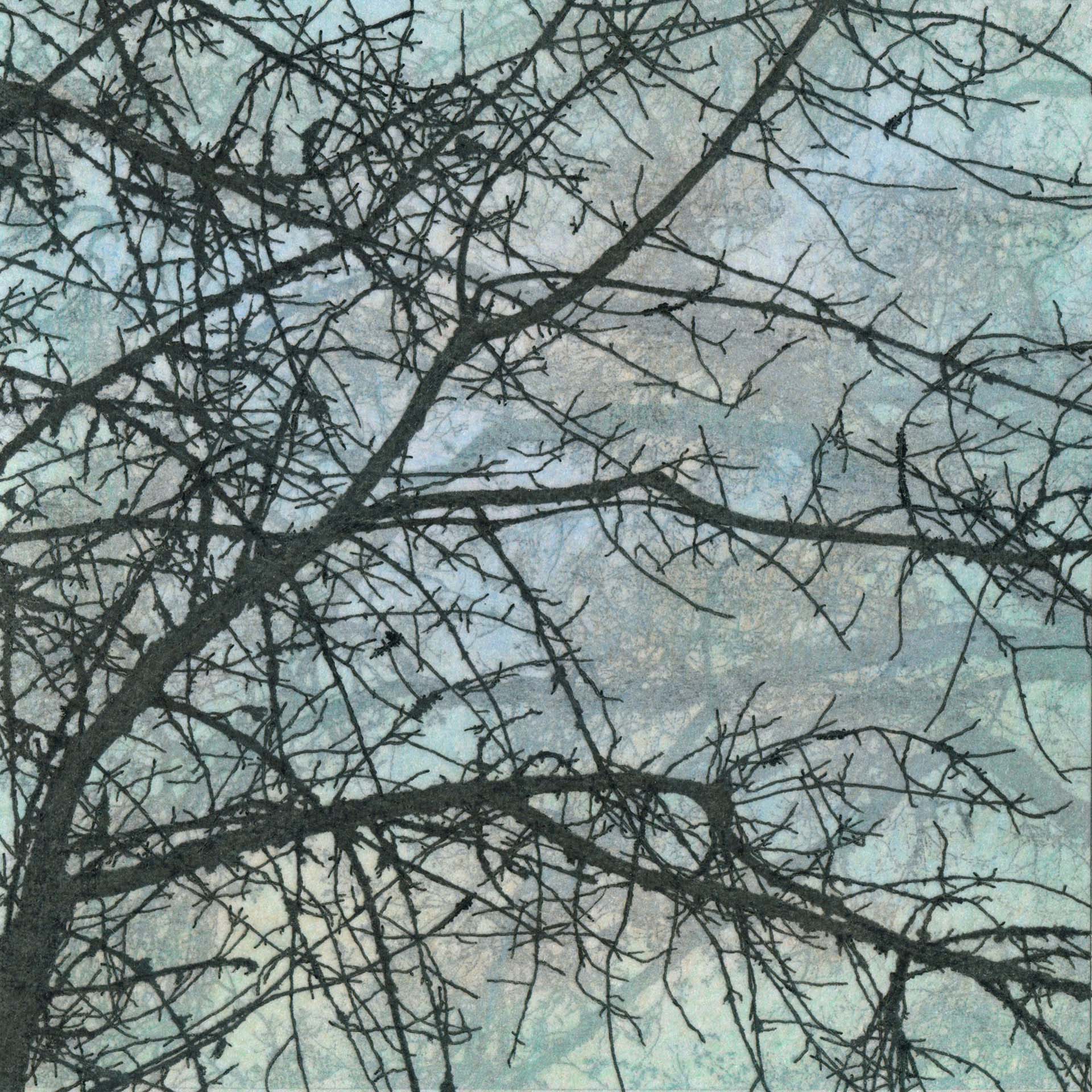
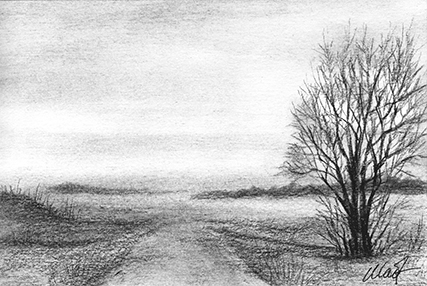
“End of Day” is a short series of three 6″ x 6″ drawings on clear gessoed wood created for the 6x6x6 Community Art Show at the Alberta Street Gallery. As it often happens, small format lends itself nicely to experiments, and the main thing I wanted to find out here was how well multiple layers of colored pencil on a primed wooden panel would accept ink.
The answer is: not really well if it is a felt tip pen, better if the tip is a soft brush, but an actual brush dipped into India ink is the easiest way. Really, should’ve used a brush or at least a brush pen from the beginning, but I wanted to exhaust all available pen options first. And no, this is not an exaggeration: I went through dozens of different pen brands before one finally sort of worked.
It may be that I didn’t sand the clear gesso enough and that made the texture get in the way of pens. I am going to try the same combination of colored pencils and black pen on clear wood to be sure.
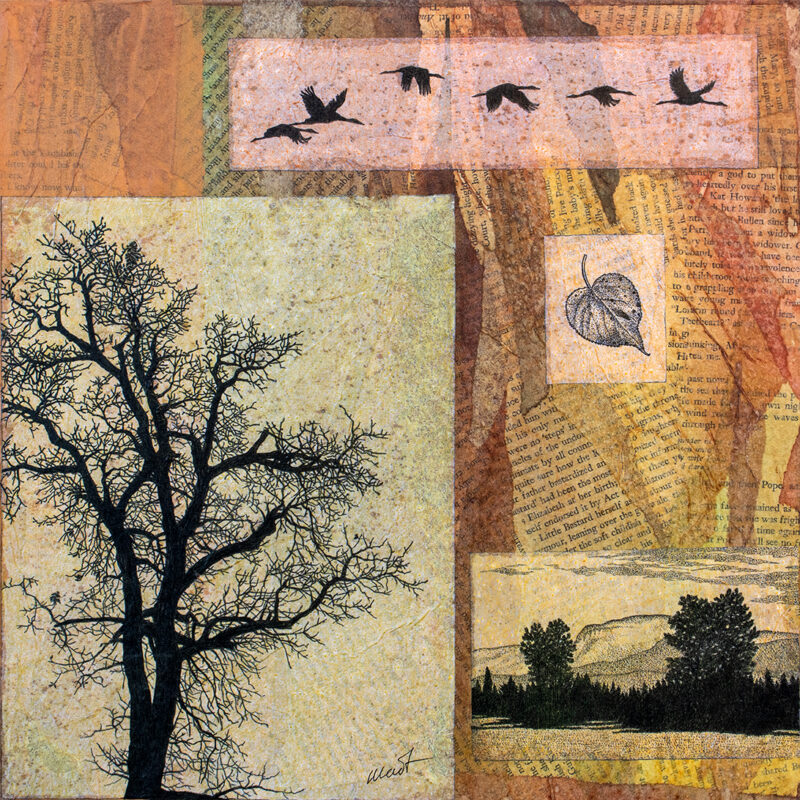
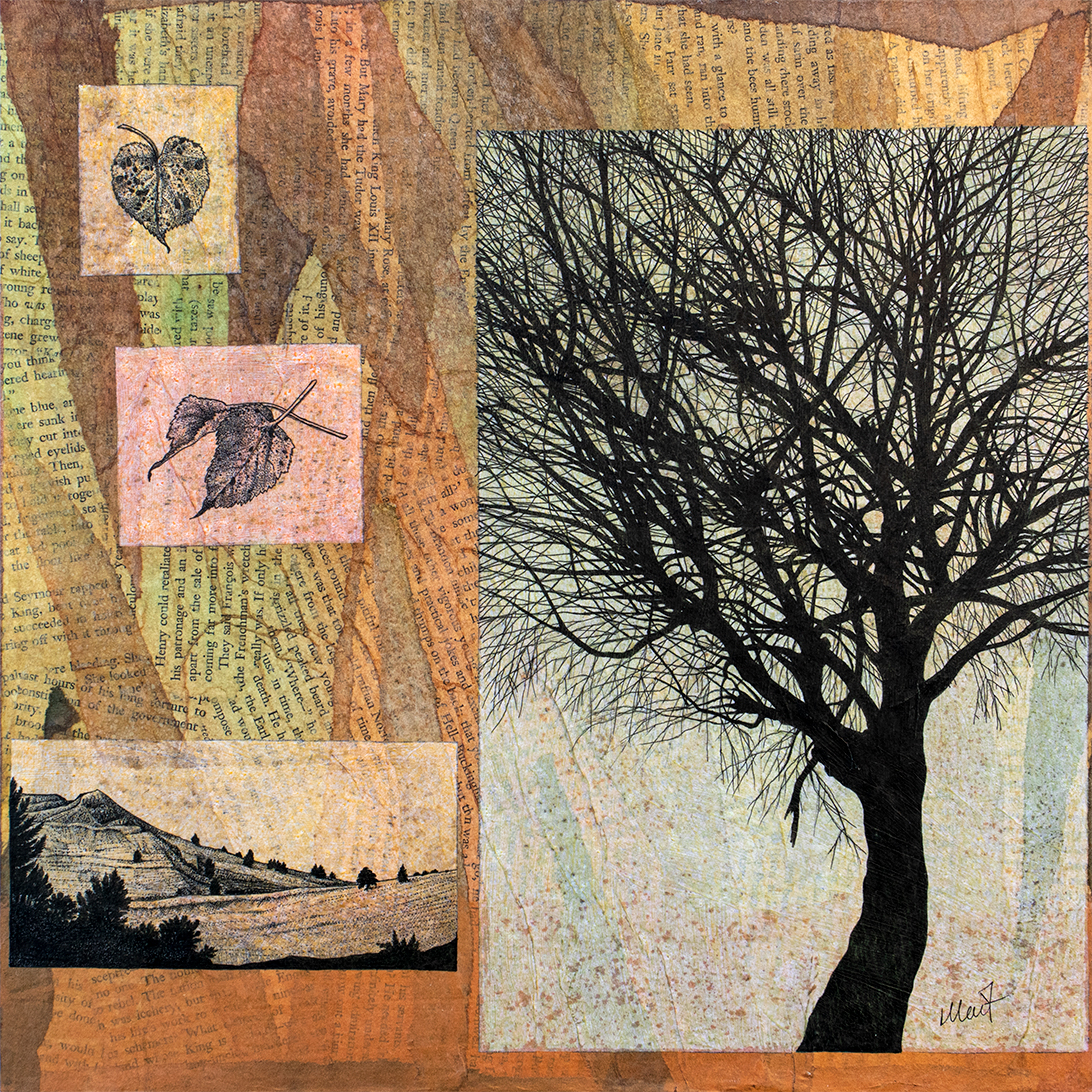
Stories of the Forest I ~ mixed media on canvas board, 12″ x 9″Stories of the Forest II ~ mixed media on canvas board, 12″ x 9″Stories of the Forest III ~ mixed media on canvas board, 12″ x 9″Stories of the Forest IV ~ mixed media on canvas board, 12″ x 9″Stories of the Forest V ~ mixed media on canvas board, 12″ x 9″
This series started with a title, and that almost never happens to me. By the time I sketched the very first piece I could not remember how exactly I came up with “Stories of the Forest,” but the initial idea was to make ink drawings of groups of trees and shrubs that would gradually fade into the paper collage background to showcase the beauty of common plant inhabitants of Western Oregon forests where I often hike. Every little plant, every shrub and tree have a story to tell if we look close, and together they weave a more complicated story that makes some unassuming spot in the forest look amazing.
It all looked good in pencil, but moving forward with inking was a different story. It looked too busy. Varying density of strokes and dots didn’t really work, so two ruined drawings I decided to change the approach. Maybe pen and ink was not the right choice for what I wanted to achieve, or maybe (and more likely) I failed to collaborate with my pens properly.
So I started to remove details that were less essential from my sketches, starting with varied growth under and behind tree branches, then with nonessential branches themselves. I do all corrections on tracing paper laid on top of the original sketch that needs to be improved. This considerably speeds up the process and keeps new ideas flowing without interruption of redrawing the same parts of a sketch.
And that’s how I’ve ended up with just a few leaves and scarcely spaced branches, letting the gently colored background to hint at whatever a viewer wants to see in the finished piece. There is special beauty in simplicity, and that old saying “less is more” gave me exactly what I wanted.
Used to monitor number of Google Analytics server requests when using Google Tag Manager
1 minute
_gid
ID used to identify users for 24 hours after last activity
24 hours
_gali
Used by Google Analytics to determine which links on a page are being clicked
30 seconds
_ga
ID used to identify users
2 years
__utmx
Used to determine whether a user is included in an A / B or Multivariate test.
18 months
__utmv
Contains custom information set by the web developer via the _setCustomVar method in Google Analytics. This cookie is updated every time new data is sent to the Google Analytics server.
2 years after last activity
_gac_
Contains information related to marketing campaigns of the user. These are shared with Google AdWords / Google Ads when the Google Ads and Google Analytics accounts are linked together.
90 days
__utmz
Contains information about the traffic source or campaign that directed user to the website. The cookie is set when the GA.js javascript is loaded and updated when data is sent to the Google Anaytics server
6 months after last activity
__utmc
Used only with old Urchin versions of Google Analytics and not with GA.js. Was used to distinguish between new sessions and visits at the end of a session.
End of session (browser)
__utmb
Used to distinguish new sessions and visits. This cookie is set when the GA.js javascript library is loaded and there is no existing __utmb cookie. The cookie is updated every time data is sent to the Google Analytics server.
30 minutes after last activity
__utmt
Used to monitor number of Google Analytics server requests
10 minutes
__utma
ID used to identify users and sessions
2 years after last activity
SourceBuster is used by WooCommerce for order attribution based on user source.
Name
Description
Duration
sbjs_migrations
Technical data to help with migrations between different versions of the tracking feature
session
sbjs_current_add
Timestamp, referring URL, and entry page for your visitor’s current visit to your store
session
sbjs_first_add
Timestamp, referring URL, and entry page for your visitor’s first visit to your store (only applicable if the visitor returns before the session expires)
session
sbjs_current
Traffic origin information for the visitor’s current visit to your store
session
sbjs_first
Traffic origin information for the visitor’s first visit to your store (only applicable if the visitor returns before the session expires)
session
sbjs_udata
Information about the visitor’s user agent, such as IP, the browser, and the device type
session
sbjs_session
The number of page views in this session and the current page path